




Summarize this article with
Consent management is the process of getting, storing, and applying user permission before you collect or use personal data, required under laws like GDPR and CCPA.
It is the cornerstone of building customer trust, personalizing user experiences, and ensuring transparent data practices. With regulations like GDPR and CCPA shaping global standards, understanding how to collect explicit consent has therefore become essential for businesses of all sizes.
Together, let's cover everything you need to know about consent management—what it is, why it matters, how it works, and how to implement it effectively on your website. Whether you’re a business owner, a marketer, an engineer, or part of your company's privacy team, this guide will help you navigate the complexities of consent management and set you up for success.
Consent management explained
Consent management empowers users to make informed decisions about their data. It encompasses everything from obtaining consent for data collection, managing preferences, and respecting user rights to withdraw consent. Done well, it ensures that businesses comply with regulations like GDPR, CCPA, and other privacy laws, while also building a foundation of trust between the business and its customers.
Let's start with addressing a few questions:
What is consent management?
Consent management is the process of obtaining, recording, and managing user consent for collecting, processing, and sharing personal data. It helps businesses comply with data privacy laws by informing users about data use and giving them control over their information and rights.
Key components of consent management
When it comes to consent management, key elements include:
- Informing users: Clearly communicate what data is being collected, the purpose behind its use, and the rights users have regarding their personal information
- Obtaining consent: Organizations must secure clear, informed permission from users before collecting personal data. This is typically done through tools like cookie consent banners, privacy notices, or agreement checkboxes
- Recording consent: Once given, consent must be logged and timestamped to create an auditable trail that proves compliance with regulations like GDPR or CCPA
- Managing consent: Users must be able to modify or withdraw their consent at any time. Businesses also need systems in place to honor data subject rights, including requests to access, update, or delete personal information
- Enforcing consent: Making sure that personal data is gathered and used strictly in line with the permissions explicitly granted by the individual
- Using data responsibly: Clearly communicate what data is being collected, the purpose behind its use, and the rights users have regarding their personal information
- Monitoring compliance: Continuously assess and refine consent management processes to stay aligned with current regulatory requirements
What is a consent management platform (CMP)?
Consent management platforms (CMPs) are software tools designed to help businesses handle user consent for data collection and processing. They offer features for creating consent banners, tracking user choices, managing preferences across systems, and maintaining detailed records to support regulatory compliance.
Read more: The consent management platform you can trust
CMPs are digital tools designed to simplify and automate how organizations handle user consent. They support businesses by:
- Managing consent across various touchpoints like websites, apps, and digital platforms
- Logging and maintaining detailed records of user consent choices
- Giving users transparent information and control over how their data is used
- Producing compliance documentation and reports as needed
- Improving efficiency by reducing manual consent-related tasks
Go further: Google's CMP Partner list
What is user consent?
User consent is the informed, voluntary agreement by an individual to allow the collection, processing, or sharing of their personal data. This consent is given based on a clear understanding of what data will be used for, who will access it, and how it will be managed, enabling individuals to control their privacy.
What are the types of user consent?
The main types of consent are:
- Explicit consent: Clearly and actively given, often in writing, usually for sensitive data.
- Implied consent: Inferred from a user’s actions, like using a service.
- Informed consent: Based on a full understanding of what’s being agreed to.
- Opt-in consent: Requires a positive action to agree.
- Opt-out consent: Assumed unless the user actively declines.
Each type aims to ensure the user’s privacy and data rights.
Now that we've addressed a few key terms, let's dive into why capturing and orchestrating consent matters.
Why is consent management important?
Consent management is pivotal for both businesses and users. Beyond meeting legal requirements, consent management is a way for businesses to show they respect user privacy.
Purpose of consent management
The purpose of consent management is to ensure organizations handle personal data responsibly and lawfully. It serves several important functions:
- Regulatory compliance: Helps businesses meet the requirements of privacy laws such as GDPR and CCPA
- User trust: Promotes transparency and gives individuals control over their data, strengthening customer relationships
- Risk reduction: Minimizes the likelihood of legal penalties, fines, or reputational damage due to non-compliance
- Protecting user privacy: Consent management gives individuals control over how their personal data is used, enabling informed choices and honoring their privacy rights
- Data accuracy and relevance: Effective consent management supports the collection of high-quality data by ensuring it is current, meaningful, and aligned with user permissions
With users becoming increasingly cautious, brands that prioritize transparency around data usage foster stronger, more loyal customer relationships. A Cisco study shows that 81% of website visitors see data practices as a reflection of how a company values them, while 63% of global consumers feel most companies aren't transparent about how their data is used (Tableau).
77% of users agree that they are concerned about how their data is being gathered and used by companies
Benefits of consent management
In summary, consent management matters beyond regulatory compliance and consent choices. It is for important for:
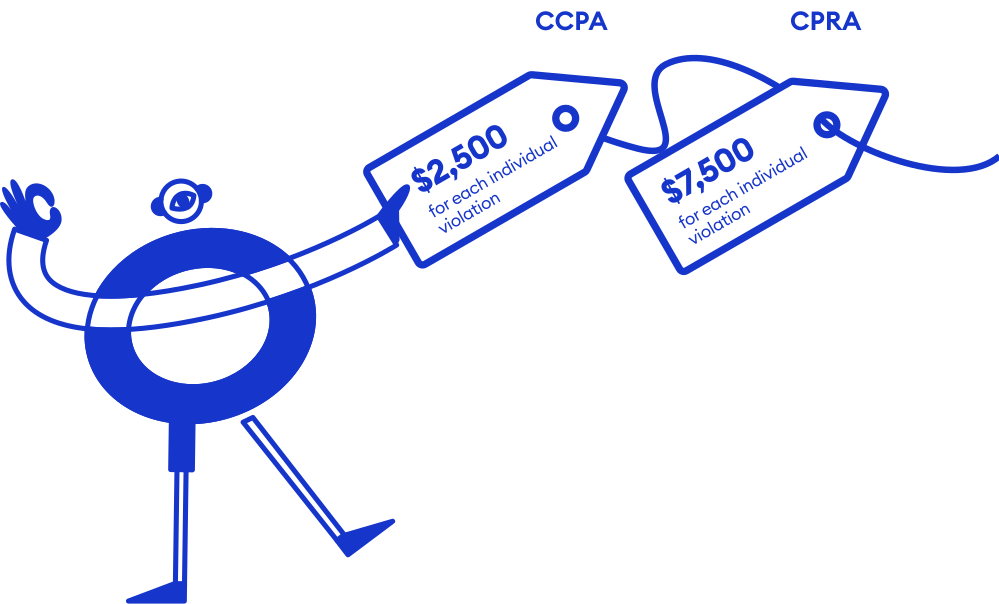
- Regulatory compliance: With laws like the GDPR in the European Union and CCPA in California, companies are legally required to give users control over their data. Non-compliance can lead to significant fines and reputational damage
- Building user trust: Transparent data practices foster trust with users, which can improve customer loyalty and reduce churn
- Better user experience: Properly implemented consent management improves user experience by allowing users to customize their privacy preferences without interrupting their browsing
- Operational efficiency: Simplifies and automates consent workflows, reducing manual workload
Privacy laws and consent management
In the United States, consent management requirements are primarily defined at the state level, as there is currently no federal privacy law equivalent to the EU's GDPR.
Here are some of the most notable US state privacy laws requiring consent management:

Key components of consent management
An effective consent management solution consists of several critical components:
1. Consent collection
It involves gathering consent through pop-ups, forms, or preference centers. The collection must be transparent and accessible, explaining clearly what data is collected and why.
2. Centralized consent repository
Having a single source for all consent data streamlines compliance and makes it easier to manage and update consent preferences in real time
3. Preference management
Consent management isn’t just about saying “yes” or “no” to data collection. Users should be able to choose what types of data they’re comfortable sharing and how often they want to be contacted. Differentiating between preference and consent management can improve user satisfaction and engagement.
4. Lifecycle management
Consent is not static. Businesses must regularly audit, update, and renew consent records as data practices evolve. A CMP can help automate consent updates, ensuring compliance and keeping the user informed about any changes in data use
5. Withdrawal and deletion
Enabling users to withdraw consent at any point is a regulatory requirement and a trust-builder. When consent is withdrawn, businesses must delete or anonymize data accordingly.
Read more: 3 requirements for effective consent management
How does a consent management platform (CMP) work?
Consent management solutions are digital tools that handle the technical side of consent management. It typically works as follows:
- Banner display: When a user visits a site for the first time, a consent banner or pop-up appears, asking them to accept, reject, or customize data tracking options.
- Consent storage: Once the user makes their selection, the CMP stores this information in a secure database, usually tied to the user’s IP or a cookie ID.
- Automatic compliance: CMPs ensure that only approved data is collected and processed, based on user preferences.
- Consent logging: Many CMPs log each user's consent history, which is useful for audits and legal compliance.

Key features of a robust consent management system
To choose the right CMP for your organization, look for these essential features:
- Customizable consent forms: Adapt the consent prompt to match your brand and address various regulatory requirements.
- Flexible consent options: Allow users to opt-in, opt-out, or customize their preferences at a granular level.
- Automated record-keeping: Compliance audits require proof of consent. Automated logging features make record-keeping easier.
- Compliance across jurisdictions: Different regions have unique laws. Look for CMPs that support multi-jurisdictional compliance (GDPR, CCPA, etc.).
- Compliance across devices: Ensures that user consent preferences are accurately collected, synchronized, and respected on every platform — from websites and mobile apps to connected devices — maintaining a consistent data privacy experience regardless of the device used.
- User-friendly interface: A CMP should be easy to navigate for website visitors and non-intrusive to ensure a positive user experience.
Top consent management platforms in 2026
There are various Consent management platforms (CMPs) tailored to different business needs, each providing compliance solutions while enhancing the user experience.
Some of the most popular consent management platforms include:
- Ketch: next gen, highly customizable, and user-friendly option with real consent orchestration capabilities.
- OneTrust: Known for extensive compliance capabilities and customization.
- TrustArc: Strong for multi-jurisdictional compliance and privacy management.
Go further: Compare Ketch vs. Onetrust

Compare some of the best consent management platforms
Each platform offers unique features, so it’s crucial to evaluate your organization’s specific needs before making a selection.
Go further: Best consent management platforms
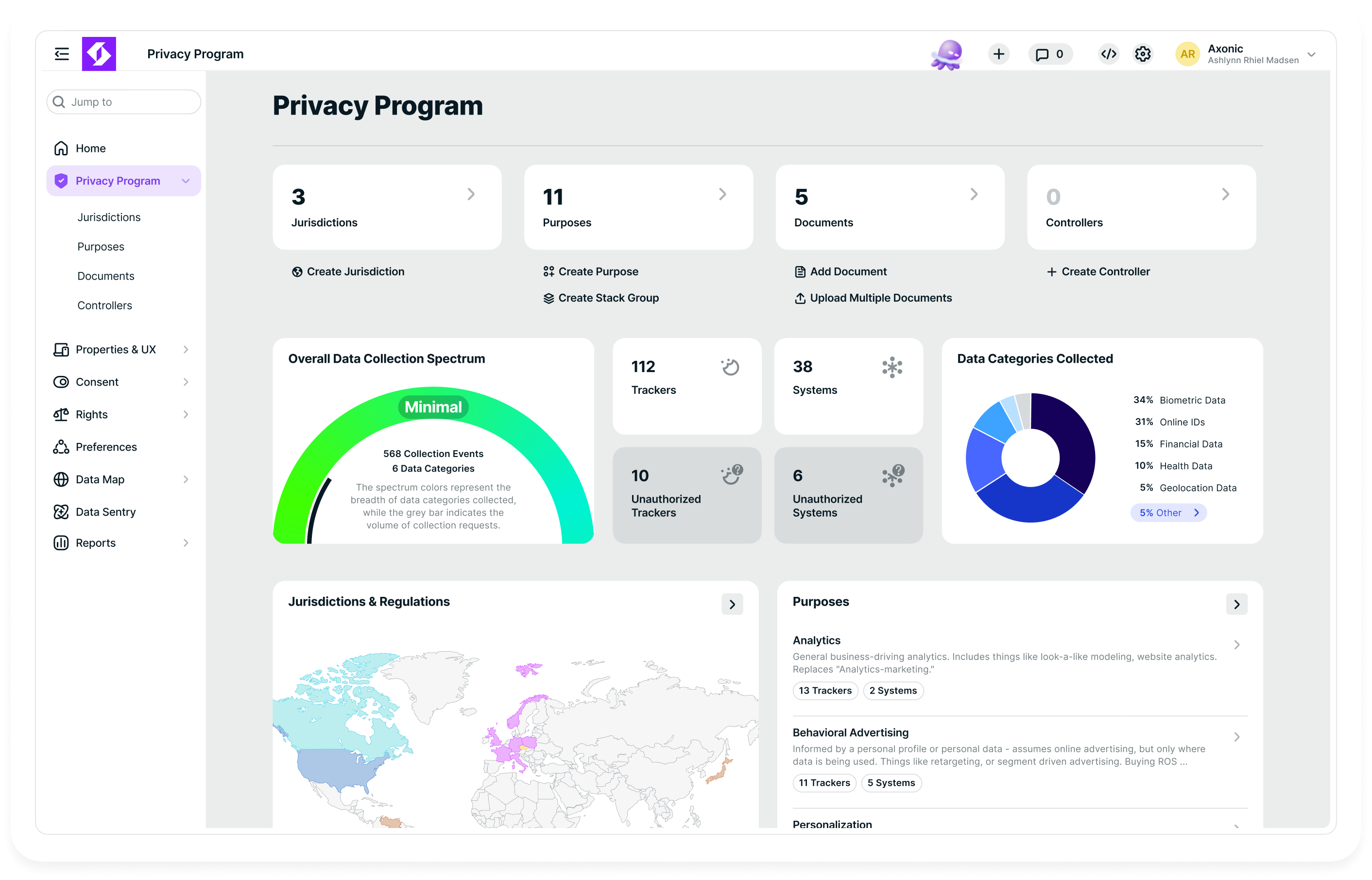
See how Ketch's consent capture and orchestration work
Tips & best practices for effective consent management
1. Prioritize user experience (UX)
Avoid overwhelming users with pop-ups. Design a clean, unobtrusive consent banner with clear options.
2. Use clear, transparent and concise language
Avoid legal jargon in consent prompts. Use simple, clear language to explain why you’re collecting data and how it will be used. Many companies improve their opt-in rates by making their consent requests transparent and easy to understand.
3. Segment user preferences
Use a CMP that allows you to tailor consent options based on region or user type, which improves compliance and user satisfaction.ulatory transparency requirements.
4. Offer real-world examples
Users are more likely to understand and agree to data collection if they see practical examples. For instance, show how data collection can improve their shopping experience or personalize content.
5. Create a dedicated privacy center
Having a centralized, easy-to-access privacy center where users can manage their consent and preferences fosters trust and compliance. A well-designed privacy center enables users to control not just consent but also the frequency and nature of communications they receive.
6. Update your CMP regularly
As regulations evolve, keep your consent management system up-to-date to maintain compliance.
7. Regularly audit your consent practices
The digital landscape and regulatory environment are constantly changing. Regular audits of your consent management practices will ensure you’re always compliant with the latest requirements, such as opt-in updates for sensitive data
Go further: How to achieve data privacy compliance
Common challenges and how to overcome them
Managing consent across multiple channels
In a multi-channel environment, gathering and maintaining consistent consent records can be challenging. Implementing a centralized CMP that collects and orchestrates consent across all channels — web, mobile, CRM, and more — helps keep data consistent and compliant.
Adapting to regional privacy laws
As privacy laws vary widely across regions, a one-size-fits-all approach to consent management doesn’t work. Customize consent practices according to the data protection regulations of each country to avoid fines and build global trust.
Addressing user concerns over privacy
Users are more aware of their data rights than ever. Proactively address privacy concerns by providing detailed but digestible information on data practices and privacy policies to build user confidence.
Examples of effective consent management
Consent management practices vary widely across industries due to their unique regulatory landscapes and customer data needs. Let's take a look at a few real-life examples:
In the retail industry
In retail, consent management focuses on cookie usage and data collection for personalized marketing, allowing businesses to track preferences while adhering to GDPR and CCPA requirements.
For example, The RealReal needed to find an easy-to-use compliance tool that supports the online shopping experience. Ketch offered them a comprehensive, no-code tool for consent management.
“As an attorney, I find Ketch Consent Management invaluable for making necessary privacy risk adjustments quickly and confidently, without needing extensive technical knowledge. This level of control and ease of use is rare in the market.”
John Dombrowski, Associate General Counsel for Compliance and IP at The RealReal
Read the full case study: Ketch consent management simplifies compliance for The RealReal
In the media industry
The media industry handles a high volume of user data, often involving cross-platform tracking and personalized content recommendations, which require transparent consent to build user trust and comply with regulations.
For example, Forbes needed to find data privacy software to meet customized requirements. Ketch offered them a collaborative deployment with forward-leaning product and engineering teams.
“Ketch’s product and engineering teams have been great partners, always willing to accept feedback and work with us to enhance features and customizations that align with providing the Forbes consumer an intuitive consent and DSR experience.”
Forbes Privacy Team
Read the full case study: Forbes chooses Ketch for future-proof data privacy compliance
In the financial services industry
Financial services must manage highly sensitive financial data, prioritizing strict opt-in consent and secure data handling under laws like GLBA and FINRA.
For example, Spreedly needed a data privacy solution fast to replace a dated legacy vendor. They turned to Ketch for great tech and speedy deployment.
"We are absolutely delighted with our Ketch experience to date. Their responsiveness to our implementation has taken us from project start to go-live in just three weeks. Few vendors can match this time-to-value."
Jennifer Rosario, Chief Information Security Officer, Spreedly
Read the full case study: Spreedly achieves data privacy compliance in 3 weeks with Ketch
Reflecting on consent management
Consent management is essential to operating in today’s digital landscape. It’s a bridge between compliance and trust, ensuring that user data is collected responsibly, stored securely, and used ethically. By implementing a robust consent management solution and adopting practices focused on transparency, user choice, and ethical data handling, businesses can set themselves apart and build lasting relationships with their customers.
How consent management supports ethical data practices and customer experience
A well-executed consent management strategy doesn’t just ensure compliance — it creates value. Ethical data practices lead to higher-quality data, more accurate insights, and improved personalization efforts. Users who feel their privacy is respected are more likely to trust brands, resulting in better engagement and customer loyalty. Furthermore, businesses can use consent data ethically to refine marketing campaigns and reduce customer churn by respecting user preferences
The future of consent management
Consent management is evolving from:
- Static cookie banners → dynamic consent intelligence
- Page-level decisions → user-level signals
- Frontend UI → backend enforcement
- Compliance tools → trust infrastructure
Consent will power the future of AI, data, and digital trust—and Ketch is built for it.
The next generation of consent management moves beyond static banners and manual rule updates. As AI and machine learning reshape how organizations use data, consent must become dynamic, intelligent, and deeply embedded into digital experiences. The future CMP adapts in real time, respects individual preferences by design, and scales across global regulations without friction. That future already exists, with Ketch.
Consent becomes the foundation of AI privacy
AI only works when data is permissioned, trusted, and compliant.
As organizations deploy AI systems, regulators and consumers are demanding clarity on how personal data is collected, used, and shared. Consent is no longer a checkbox. It’s the legal, ethical, and operational foundation of responsible AI. Ketch places consent at the center of AI privacy by ensuring data is collected with clear purpose, governed in real time, and enforced across systems automatically.
Progressive Consent defines the next era of CMPs
Progressive Consent replaces interruptions with intelligence.
Traditional pop-ups and cookie banners break experiences and erode trust. Progressive Consent flips the model by embedding privacy choices directly into user journeys, when context matters and value is clear. Ketch leads this shift with consent that is predictive, contextual, and adaptive, improving opt-in rates while honoring user intent and regulatory requirements.
Instead of asking for everything upfront, Progressive Consent earns permission over time.
Ketch is the CMP built for the future
As the best innovative CMP solution in the market, Ketch is built for this future:
- API-first and headless, so consent works across any channel
- Signal-based, enabling real-time enforcement across systems
- Regulation-agnostic, adaptable to new laws as they emerge
- Unified consent + preferences, removing silos
- Designed for AI-driven data ecosystems, where consent must travel with data, not live in a banner
As privacy regulations expand and AI reshapes data usage, Ketch positions consent management as a core data control layer, not a compliance afterthought.
Ketch isn’t just compliant, it’s composable, intelligent, and AI-ready.
Most CMPs were built to react to laws. Ketch was built to scale with them. With automated adaptability to global regulations, real-time consent orchestration, and privacy-by-design architecture, Ketch supports modern data strategies without compromising trust. That’s why forward-looking organizations use Ketch to unlock first-party data, fuel AI responsibly, and stay ahead of what regulators—and customers—expect next.
Why future-ready organizations choose Ketch
The best CMP enables growth, not just compliance.
- Progressive Consent that increases opt-ins without dark patterns
- Centralized, real-time consent enforcement across systems
- Built-in support for AI governance and permissioned data use
- Global compliance without constant manual updates
- Privacy experiences that respect people and strengthen brands
Investing in Ketch isn’t about avoiding fines. It’s about building a customer-first data strategy where trust, transparency, and innovation move together—at the speed of the future.


