




Summarize this article with
The key to choosing the best CCPA compliance software is understanding how each platform supports consumer rights, consent governance, and data visibility. Strong tooling helps organizations navigate California’s privacy regulations with less manual effort and greater accuracy.
Why CCPA compliance software matters
California’s CCPA laws set strict expectations for data privacy and how businesses collect, use, and store personal information. A dedicated compliance platform helps companies manage consumer requests, validate lawful data practices, and implement repeatable privacy workflows. Selecting the right software reduces risk, improves operational efficiency, and strengthens customer trust.
One of the most significant recent developments is California's DELETE Act and DROP platform, which requires registered data brokers to process consumer deletion requests on a recurring 45-day cycle starting August 1, 2026.
What is CCPA compliance software?
CCPA compliance software is a privacy solution that enables organizations to meet California Consumer Privacy Act requirements. These tools centralize consent management, automate opt-out processes, support consumer rights requests, and provide secure data governance. The goal is to reduce manual tasks and ensure consistent, scalable compliance.
Key features of CCPA compliance software
Let's explore the essential features that make CCPA compliance software an invaluable asset for privacy-focused companies.
1. Cross-channel consent management
The key takeaway: effective consent management ensures lawful data usage across all customer touchpoints.
A strong compliance solution records when and how consent was collected across websites, mobile apps, and connected devices. Platforms like the Ketch consent management platform (CMP) maintain verifiable consent histories, support opt-out mechanisms, and uphold transparency, all core requirements under the CCPA.
Read more: The best consent management platforms

2. Automated consumer rights management
The core requirement: consumers must be able to know, access, delete, and restrict the sale of their data and personal information.
Software designed for consumer rights management automates data subject request workflows, ensures timely responses, and creates auditable records. This functionality helps teams maintain compliance without introducing operational bottlenecks.
A well-designed data subject access request software aids in managing these consumer requests and ensures timely responses to maintain compliance.
Read more: DSR automation
3. Data mapping and classification
The main function: data mapping reveals where personal information is collected, stored, and shared.
A strong mapping tool gives complete visibility into data flows so organizations can identify sensitive information and respond accurately to access or deletion requests. This visibility is essential for maintaining compliance and reducing privacy risk.
Keep reading:
Easily automate CCPA compliance for your organization
Benefits of implementing CCPA compliance software
By integrating CCPA compliance software, businesses can improve data governance, reduce operational costs, and ensure scalable privacy protection as data regulations evolve. Additionally, automated workflows and pre-built templates ensure consistent and thorough compliance practices, making it easier to manage ongoing compliance.
Streamlined compliance
Automated workflows replace manual processes and support structured data governance. Teams gain the ability to manage data consistently, reduce errors, and demonstrate their commitment to protecting consumer rights.
Risk mitigation
Comprehensive privacy infrastructure reduces exposure to regulatory penalties, reputational damage, and operational disruptions. Tools such as Ketch or Ketch Free help organizations detect vulnerabilities early and address non-compliance risks.
Reducing penalties
Proactive compliance lowers the likelihood of CCPA enforcement actions and strengthens a company’s overall risk posture.
Minimizing privacy risk
Automated monitoring and issue detection provide an early warning system for privacy gaps. Consistent application of CCPA principles significantly reduces the possibility of data misuse.
Automation
The automated process involved in detecting and fixing potential vulnerabilities or non-compliance issues also helps in early risk detection, further minimizing the privacy risk for businesses.
Stronger consumer trust
Transparent privacy practices reassure consumers that their personal information is handled responsibly. When businesses demonstrate compliance through clear consent management and secure data handling, they build loyalty and long-term engagement.
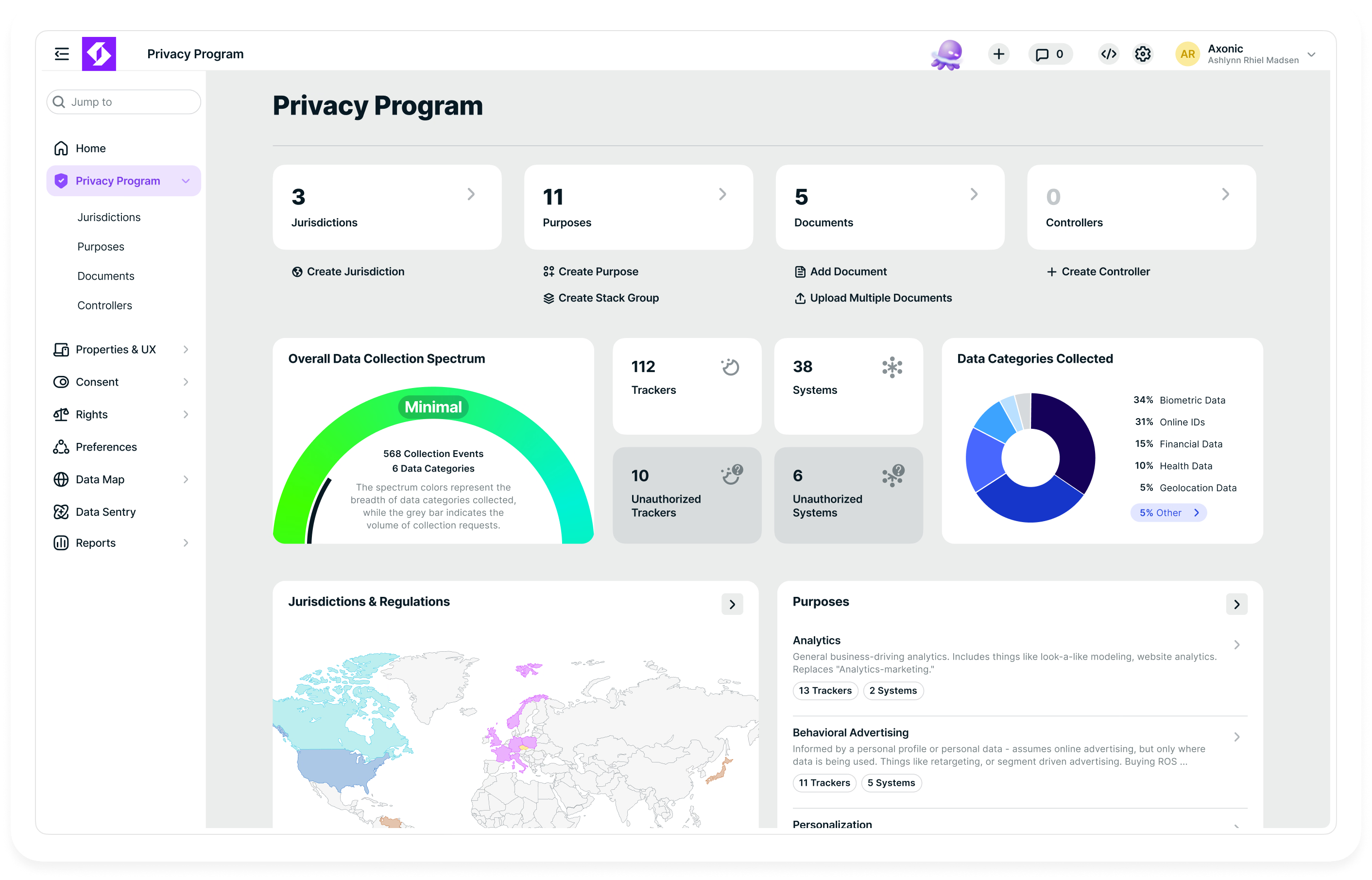
Comparing top CCPA compliance solutions
Ketch
Ketch offers privacy automation, real-time data governance, flexible consent tracking, and robust consumer rights workflows. Its scalable architecture supports evolving global regulations beyond CCPA.
Scytale
Scytale provides automated compliance for frameworks such as SOC 2, ISO 27001, and GDPR. It focuses on real-time monitoring, audit readiness, and continuous controls management.
OneTrust
OneTrust delivers enterprise-grade privacy management with automated data discovery, advanced consent tools, and structured consumer rights request workflows. It usually better-suited for large organizations with complex data environments.
Read more: OneTrust vs Ketch
Osano
Osano specializes in user-friendly compliance with strong DSAR workflows, consent management, and vendor risk scoring. It is a practical choice for smaller organizations.
Read more: Osano vs Ketch
When considering the best CCPA compliance solutions, know that each of these platforms offers unique strengths, depending on your business needs. OneTrust stands out for large, complex enterprises, Osano for smaller organizations, and Ketch for companies prioritizing future-proof, scalable, cross-regulatory compliance.
Read more: Top CCPA compliance software tools
Example of effective CCPA compliance solution
After expanding into the United States, Good Smile Company needed a scalable privacy solution. Their existing homegrown tools could not support new requirements, including CCPA and CPRA compliance. By adopting Ketch, the company established a unified privacy framework and automated rights management across all U.S. locations.
“We needed to move from homegrown compliance to scalable, future-proof privacy tech. Ketch is a great solution for us. Today we’re complying with privacy regulations and respecting people’s privacy choices in every data system.”
Taylor Locke, Director of IT, Good Smile Company
Read the full case study: Good Smile Company achieves CCPA/CPRA readiness with Ketch

Why choose Ketch for CCPA compliance?
The Ketch platform offers a comprehensive suite of tools to simplify CCPA compliance. With features like automated data mapping, consent management, and customizable consumer rights workflows, Ketch helps businesses efficiently meet regulatory demands while building a privacy-first culture.
Consider Ketch Free while searching for a practical way to embark on a CCPA compliance journey. This resource is designed to provide smaller-scale businesses with cost-effective compliance solutions.
In essence, CCPA compliance software is monumental in a business's privacy management landscape. Its inherent features help to streamline processes and ensure robust compliance with CCPA. That's going to foster trust among consumers and unlock potential avenues for growth.
Go further: GDPR vs. CCPA/CPRA compliance: what's the difference?


