



Summarize this article with
Key definitions in MCDPA
The Montana Privacy law introduces several critical terms, as outlined in Section 30-14-2802 of the Montana Code Annotated.
- Consumer: A resident of Montana acting in an individual or household context, excluding those acting in commercial or employment contexts.
- Personal data: Information linked or reasonably linkable to an identified or identifiable individual, excluding de-identified data or publicly available information.
- Sensitive data: A subset of personal data including information on racial or ethnic origin, religious beliefs, mental or physical health conditions, sexual orientation, citizenship or immigration status, genetic or biometric data for unique identification, and data collected from children under 13 years of age.
- Controller: An individual or entity that determines the purpose and means of processing personal data.
- Processor: An individual or entity that processes personal data on behalf of a controller.
- Sale of personal data: The exchange of personal data for monetary or other valuable consideration to a third party, with specific exceptions such as disclosures to processors or affiliates.
- Consent: A clear affirmative act signifying a consumer's freely given, specific, informed, and unambiguous agreement to process their personal data, excluding acceptance obtained through general terms or dark patterns.
Who must comply with MCDPA?
The Montana Consumer Data Privacy Act (MCDPA) applies to businesses that:
- Conduct business in Montana or target Montana residents, and
- Control or process personal data of at least 50,000 consumers annually, or
- Control or process personal data of at least 25,000 consumers and derive over 25% of gross revenue from data sales.
MCDPA exemptions
The Montana data privacy law includes specific exemptions:
- Entities: Exemptions apply to state agencies, nonprofits, higher education institutions, and financial institutions subject to the Gramm-Leach-Bliley Act (GLBA).
- Data Types: Exemptions cover data regulated by laws such as HIPAA, FCRA, COPPA, FERPA, and the Driver's Privacy Protection Act.
These exemptions ensure MCDPA compliance focuses on entities and data not already governed by existing federal regulations.
Key provisions of MCDPA
The Montana Consumer Data Privacy Act (MCDPA) establishes comprehensive consumer data privacy protections. Here are its key provisions:
1. Consumer Rights
Montana residents have the right to:
- Access: Request and obtain a copy of their personal data collected by businesses.
- Correction: Request corrections to inaccurate personal data.
- Deletion: Request deletion of personal data collected about them.
- Data Portability: Obtain their data in a structured, portable format.
- Opt-Out: Decline processing of their personal data for:
- Targeted advertising
- Sale of personal data
- Certain types of profiling
2. Business obligations
Companies must:
- Provide clear privacy notices explaining data collection, use, and consumer rights
- Allow universal opt-out mechanisms (e.g., browser settings)
- Limit data collection to what is necessary for disclosed purposes
- Secure personal data against unauthorized access
- Conduct data protection assessments for high-risk data processing (e.g., targeted ads, profiling)
3. Enforcement
- The Montana Attorney General enforces the law.
- Companies have a 60-day cure period to address violations before enforcement actions begin.
- No private right of action (i.e., consumers cannot sue businesses directly).
Is MCDPA opt-in or opt-out?
The Montana Consumer Data Privacy Act (MCDPA) primarily follows an opt-out model for most data processing activities but requires opt-in consent for sensitive data.
Opt-Out Provisions
- Consumers must take action to opt out of:
- Targeted advertising
- Sale of personal data
- Certain types of profiling
- Businesses must implement a universal opt-out mechanism by January 1, 2025, allowing consumers to opt out through browser settings or other automated means.
Opt-In Requirement for Sensitive Data:
Businesses must obtain explicit opt-in consent before processing:
- Racial or ethnic origin
- Religious beliefs
- Health data
- Sexual orientation
- Precise geolocation data
- Biometric or genetic data
The price of non-compliance
Failure to comply with the MCDPA can result in legal and financial consequences, including enforcement actions by the Attorney General and potential civil penalties.

MCDPA Fines & Penalties
The Montana Consumer Data Privacy Act (MCDPA) is enforced exclusively by the Montana Attorney General, with the following fines and penalties:
Cure period
Businesses found violating the law must be given a 60-day cure period to address non-compliance before enforcement actions begin. The cure provision will terminate on April 1, 2026 (eighteen months after law goes into effect).
MCDPA penalties
Businesses that fail to comply after the 60-day cure period may face:
- Fines of up to $7,500 per violation (each affected consumer could count as a separate violation).
- Additional penalties for ongoing or repeated violations.
Legal and reputational risks
- Investigations and legal actions by the Attorney General could lead to costly litigation.
- Damage to brand reputation if consumers lose trust in the company’s data practices.
- Loss of business partnerships, as many companies prefer to work with privacy-compliant vendors.
No private right of action
- Unlike California’s CCPA, Montana’s law does not allow consumers to sue businesses directly.
- Only the Attorney General can take enforcement action.

The impact of MCDPA on businesses
Businesses subject to the Montana Consumer Data Privacy Act (MCDPA) must follow a range of compliance requirements to protect consumer data and uphold privacy rights. These obligations include transparency in data practices, honoring consumer rights, implementing security measures, and ensuring responsible data processing.
What are the MCDPA requirements for businesses?
To comply with MCDPA, businesses must ensure the following:
- Privacy notices: Businesses must provide clear and transparent privacy policies explaining data collection, usage, and consumer rights.
- Universal opt-out: Businesses must implement a universal opt-out mechanism, allowing consumers to opt out via browser settings or other automated tools.
- Data minimization: Businesses can only collect personal data necessary for disclosed purposes.
- Security measures: Companies must take reasonable steps to protect consumer data.
- Sensitive data restrictions: Businesses must obtain explicit opt-in consent before processing sensitive data (e.g., health, biometric, geolocation).
- Data protection assessments: Required for high-risk processing activities, including targeted advertising and profiling.
The impact of MCDPA on consumers
Understanding Montana consumer rights
The MCDPA strengthens consumer privacy rights, giving individuals greater control over their personal data. Residents can access, correct, delete, and obtain a copy of their personal data, ensuring transparency in how businesses handle their information.
Additionally, they have the right to opt out of targeted advertising, data sales, and certain types of profiling, reducing unwanted tracking and personalized marketing. The law also mandates a universal opt-out mechanism, making it easier for consumers to enforce their choices without manually opting out from each business.
MCDPA also enhances protections for sensitive data, requiring businesses to obtain explicit opt-in consent before processing information related to health, biometric data, precise location, and other highly personal categories.
These safeguards help prevent unauthorized use of private information and minimize the risk of data exploitation. With stronger security requirements and accountability measures in place, consumers can expect greater transparency, improved privacy protections, and more control over their online footprint as businesses work to comply with the new regulations.
How MCDPA compares to other U.S. data privacy laws
The MCDPA aligns closely with other state-level privacy laws, particularly those in Connecticut, Virginia, and Colorado, while differing from more stringent regulations like California’s CCPA/CPRA.
Like many other state laws, MCDPA follows a rights-based model, granting consumers the ability to access, correct, delete, and opt out of data sales and targeted advertising. It also requires businesses to implement a universal opt-out mechanism similar to Colorado and Connecticut.
MCDPA vs other state privacy laws
What makes MCDPA stand out?
While MCDPA introduces strong consumer protections, it generally strikes a business-friendly balance compared to California’s more aggressive enforcement approach, making it more similar to Colorado, Virginia, and Connecticut’s privacy laws than to CCPA/CPRA.
What are the differences between MCDPA and CCPA?
Unlike California’s opt-out for sensitive data, MCDPA requires opt-in consent for processing biometric, health, and other sensitive data, putting it in line with Virginia’s model.
One key difference between MCDPA and CCPA/CPRA is enforcement—Montana does not allow a private right of action, meaning consumers cannot sue businesses directly, whereas California permits legal action for certain data breaches.
MCDPA also grants expanded consumer rights, including access, correction, deletion, and data portability, which are standard in most state-level privacy laws. However, unlike California’s CCPA/CPRA, MCDPA does not include a broad right to opt out of all data sharing—it specifically focuses on data sales, targeted ads, and profiling.
What are the differences between MCDPA and GDPR?
MCDPA and GDPR both grant consumer rights like access, correction, deletion, and data portability, but GDPR applies globally to any business processing EU data, while MCDPA applies only to qualifying businesses in Montana.
GDPR requires opt-in consent for most data processing, whereas MCDPA is primarily opt-out, except for sensitive data. GDPR has stricter fines and no cure period, unlike MCDPA’s 60-day cure period (which expires on April 1, 2026).
How to ensure MCDPA compliance
If you’ve read this far, you know that building a privacy-compliant business is important, but also far from easy. Here are eight key steps every business should take to ensure they don’t fall foul of regulators:
What is MCDPA compliance
MCDPA compliance means businesses follow the Montana Consumer Data Privacy Act by respecting consumer rights (access, correction, deletion, portability), enabling opt-outs for data sales, targeted ads, and profiling, obtaining opt-in consent for sensitive data, conducting data protection assessments, and ensuring privacy policies and security measures meet legal standards.
How to comply with MCDPA
To comply with MCDPA, you must:
- Assess applicability: Determine if your business meets the MCDPA thresholds (processing data of 50,000+ residents or 25,000+ with data sales).
- Update privacy policies: Clearly disclose data collection, use, and consumer rights.
- Implement consumer rights mechanisms: Allow users to access, correct, delete, and export their data.
- Enable opt-outs: Provide opt-outs for targeted ads, data sales, and profiling, including a universal opt-out mechanism by January 1, 2025.
- Obtain consent for sensitive data: Get explicit opt-in consent for processing biometric, health, or geolocation data.
- Conduct data protection assessments: Evaluate risks in high-impact data processing activities.
- Strengthen security measures: Protect consumer data with reasonable safeguards.
- Monitor compliance: Train staff, review policies regularly, and prepare for Attorney General enforcement.
How Ketch can simplify MCDPA compliance
Using the Ketch Platform, you can automate and streamline RIDTPPA compliance with:
- Consent management: Enables businesses to collect and track opt-in consent for sensitive data processing.
- Data subject rights requests: Automates access, correction, deletion, and opt-out requests.
- Data mapping & minimization: Identifies and limits unnecessary data collection.
- Risk & compliance monitoring: Conducts data protection assessments for high-risk processing.
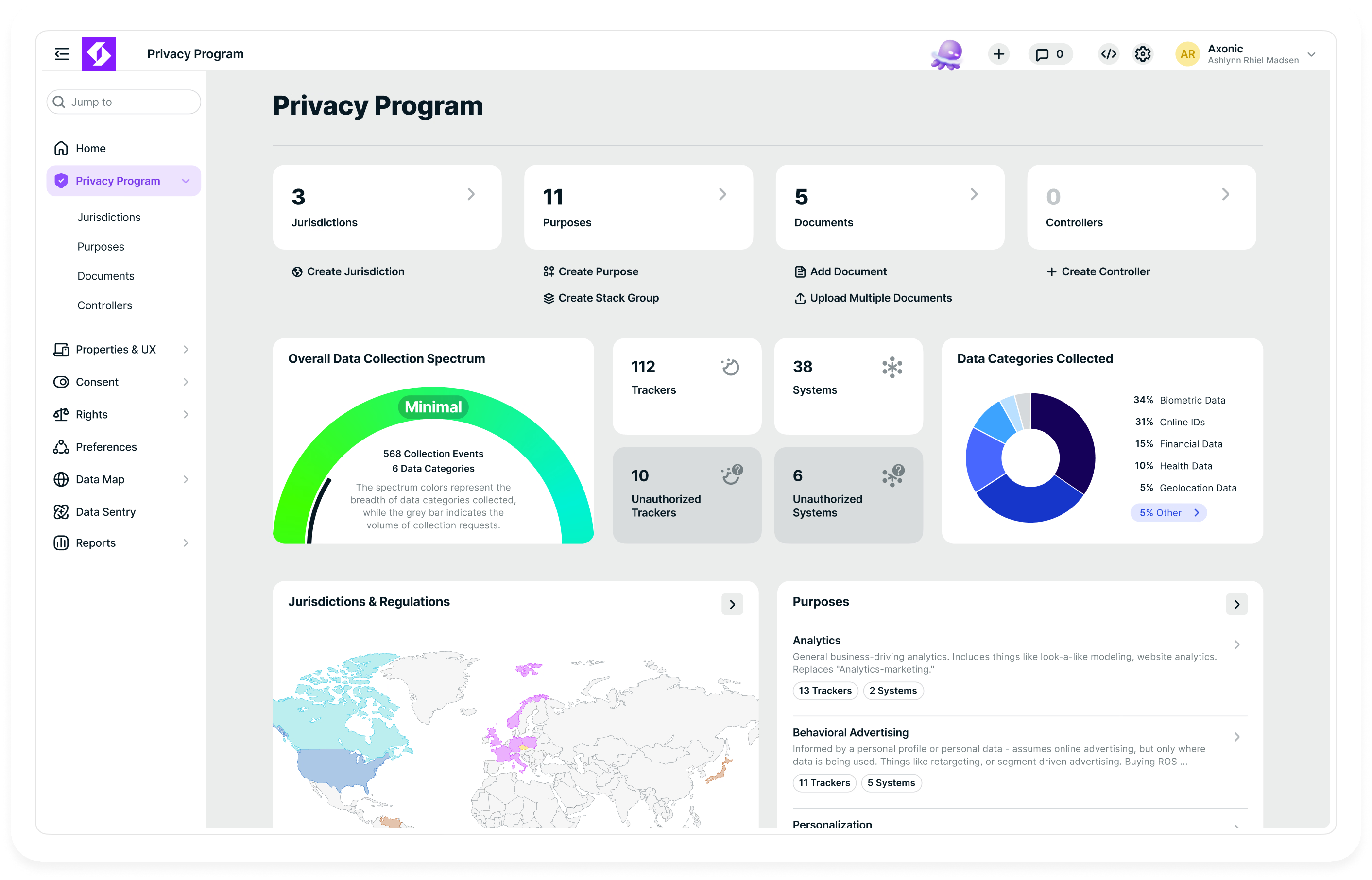
When you automate these processes, you enable your internal stakeholders:
- Your developers and marketers can do their jobs without fretting about regulations
- Your legal team can set guidelines for notice and consent, secure in the knowledge that any changes they make will ripple through your whole data ecosystem (including vendors or third-party companies using your data!)
Final thoughts: Preparing your business for MCDPA
Now that the MCDPA is in effect, businesses must proactively adjust their data privacy practices to meet its requirements. Compliance goes beyond meeting legal obligations—it involves fostering a culture of data protection and consumer trust. Staying updated on regulatory changes and continuously improving privacy measures will be essential as laws evolve.
Contact Ketch today to streamline your compliance and future-proof your privacy strategy.
Read further: 2026 U.S. State Privacy Laws: what you need to know


