



Summarize this article with
Key definitions in KCDPA
The key definitions in the Kentucky Consumer Data Protection Act (KCDPA) are outlined in Section 1 of the Act.
- Consumer: A Kentucky resident acting in an individual or household context (not commercial or employment).
- Personal data: Information that is linked or reasonably linkable to an identified or identifiable individual.
- Sensitive data: Includes racial/ethnic origin, religious beliefs, health data, sexual orientation, biometric/genetic data, precise geolocation, and children's data.
- Controller: The person or business that determines the purpose and means of processing personal data.
- Processor: A person or business that processes data on behalf of a controller.
- Processing: Any operation performed on personal data, including collection, storage, use, and sharing.
- Sale of personal data: The exchange of personal data for monetary consideration to a third party.
- Targeted advertising: Ads shown based on a consumer’s personal data from activity across nonaffiliated websites or apps.
Who must comply with KCDPA?
The KCDPA applies to businesses that:
- Conduct business in Kentucky or target products/services to Kentucky residents, and
- During a calendar year, either:
- Control or process personal data of at least 100,000 consumers, or
- Control or process data of at least 25,000 consumers and derive over 50% of gross revenue from the sale of personal data
These thresholds are similar to those in Virginia’s VCDPA and help exclude smaller businesses from the law’s scope.
KCDPA exemptions
The KCDPA exempts government entities, nonprofits, higher education institutions, GLBA-regulated financial institutions, and HIPAA-covered entities. It also excludes data covered by HIPAA, FCRA, FERPA, DPPA and employment-related data.
Key provisions of KCDPA
The Kentucky Consumer Data Protection Act establishes comprehensive consumer data privacy protections. Key provisions of the KCDPA include:
- Consumer rights: Individuals can access, correct, delete, and obtain a copy of their personal data, and opt out of targeted ads, data sales, and profiling.
- Sensitive data: Requires opt-in consent before processing data like health info, race, religion, or geolocation.
- Controller obligations: Businesses must provide clear privacy notices, limit data collection, and implement reasonable security measures.
- Processor contracts: Controllers must have agreements with processors outlining data-handling responsibilities.
- Appeals process: Consumers must be able to appeal when a rights request is denied.
- Data protection assessments: Required for high-risk processing, like profiling or handling sensitive data.
- Enforcement: Handled by the Kentucky Attorney General with a 30-day cure period for violations (no expiration).
Is KCDPA opt-in or opt-out?
The KCDPA is primarily an opt-out law. Consumers have the right to opt out of:
- Targeted advertising
- Sale of personal data
- Profiling that produces significant effects
However, it requires opt-in consent to process sensitive data, such as health information, race, religious beliefs, and precise geolocation.
The price of non-compliance
The price of non-compliance with KCDPA includes:
- Civil penalties of up to $7,500 per violation, enforced by the Kentucky Attorney General.
- A 30-day cure period gives businesses an opportunity to fix violations before penalties are imposed. Unless other U.S. state privacy laws, this cure period does not expire.
- No private right of action, but enforcement can still result in public scrutiny, reputational damage, and increased regulatory oversight.

The impact of KCDPA on businesses
The Kentucky data privacy law introduces a structured framework for how businesses collect, use, and safeguard personal data.
What are the KCDPA requirements for businesses?
To comply with the KCDPA, businesses must:
- Honor consumer rights: Enable consumers to access, correct, delete, and obtain their personal data, and opt out of targeted advertising, data sales, and profiling.
- Obtain opt-in consent: Before processing sensitive data such as health, race, religion, or precise geolocation.
- Provide clear privacy notices: Explain what data is collected, why it's used, and how consumers can exercise their rights.
- Implement data security: Use reasonable administrative, technical, and physical safeguards to protect personal data.
- Limit data collection: Collect only what is necessary for disclosed purposes.
- Offer an appeals process: Allow consumers to challenge denied rights requests and escalate to the Attorney General if unresolved.
- Maintain processor contracts: Ensure contracts with vendors outline their obligations for protecting personal data.
- Conduct data protection assessments: Evaluate risks for high-impact processing like profiling or handling sensitive data.
The impact of KCDPA on consumers
Understanding Kentucky consumer rights
The impact of KCDPA on consumers is increased control, transparency, and protection over their personal data:
- Greater control: Consumers can access, correct, delete, and obtain a copy of their personal data.
- Opt-out rights: Individuals can opt out of targeted advertising, data sales, and profiling.
- Consent for sensitive data: Businesses must get opt-in consent before processing sensitive data like health or location info.
- Transparency: Clear privacy notices help consumers understand how their data is used.
- Appeals process: If a rights request is denied, consumers can appeal and escalate to the Kentucky Attorney General.
How KCDPA compares to other U.S. data privacy laws
The KCDPA closely mirrors Virginia’s VCDPA, offering a structured, business-friendly framework. Compared to California’s CCPA/CPRA, it is narrower in scope—excluding employee and B2B data and lacking a private right of action.
KCDPA vs other state privacy laws
What makes KCDPA stand out?
KCDPA applies only to larger businesses based on consumer count, not revenue thresholds like some other states. It provides core rights like access, correction, deletion, and opt-out, and requires opt-in consent for sensitive data—similar to laws in Colorado and Connecticut. One key distinction is its permanent 30-day cure period, which does not sunset, giving businesses a consistent opportunity to remedy violations.
What makes KCDPA stand out:
- No revenue threshold: Applicability is based solely on consumer data volume, not revenue from data sales.
- Permanent 30-day cure period: Unlike other states, the cure period for violations never expires.
- No private right of action: Only the Kentucky Attorney General can enforce the law, reducing litigation risk.
- Modeled after Virginia’s VCDPA: Offers a familiar, business-friendly structure for compliance.
- Strong consumer rights: Includes access, correction, deletion, portability, and opt-out of targeted ads, data sales, and profiling.
- Processor contract requirements: Mandates written agreements outlining processor responsibilities.
- Applies to sensitive data: Requires opt-in consent for processing health, biometric, and geolocation data.
- No provision for UOOMs: Unlike many other U.S. states, Kentucky will not require controllers to allow consumers to communicate their privacy preferences through UOOMs.
What are the differences between KCDPA and CCPA?
KCDPA applies only to consumer data (not employee or B2B), has no private right of action, and includes a permanent 30-day cure period. CCPA is broader, allows limited private lawsuits, and includes more complex compliance rules like recognizing global opt-out signals.
What are the differences between KCDPA and GDPR?
KCDPA is a U.S. state law with opt-out rights and limited scope, applying to larger businesses. GDPR is broader, applies globally, requires opt-in consent for most processing, mandates a legal basis for data use, allows private lawsuits, and requires a data protection officer in some cases.
How to ensure KCDPA compliance
If you’ve read this far, you know that building a privacy-compliant business is important, but also far from easy.
What is KCDPA compliance
KCDPA compliance means meeting Kentucky’s privacy law requirements by enabling consumer rights, protecting personal data, limiting data collection, obtaining consent for sensitive data, and maintaining proper contracts and security. Enforcement is handled by the Attorney General.
How to comply with KCDPA
To comply with the Kentucky Consumer Data Protection Act (KCDPA), businesses should:
- Map data flows: Identify what personal data you collect, process, and share.
- Update privacy policies: Clearly explain data practices and consumer rights.
- Enable consumer rights requests: Build systems for access, correction, deletion, and opt-out.
- Obtain opt-in consent: Before processing sensitive data.
- Review processor contracts: Ensure they meet KCDPA requirements.
- Conduct data protection assessments: For high-risk activities like profiling or sensitive data use.
- Implement security measures: Safeguard data with reasonable protections.
- Train staff: Educate teams on privacy obligations and request handling.
- Establish an appeals process: Let consumers challenge denied requests.
- Document compliance efforts: Keep records to show good faith in case of enforcement.
How Ketch can simplify KCDPA compliance
Using the Ketch Platform, you can automate and streamline RIDTPPA compliance with:
- Consent management: Enables businesses to collect and track opt-in consent for sensitive data processing.
- Data subject rights requests: Automates access, correction, deletion, and opt-out requests.
- Data mapping & minimization: Identifies and limits unnecessary data collection.
- Risk & compliance monitoring: Conducts data protection assessments for high-risk processing.
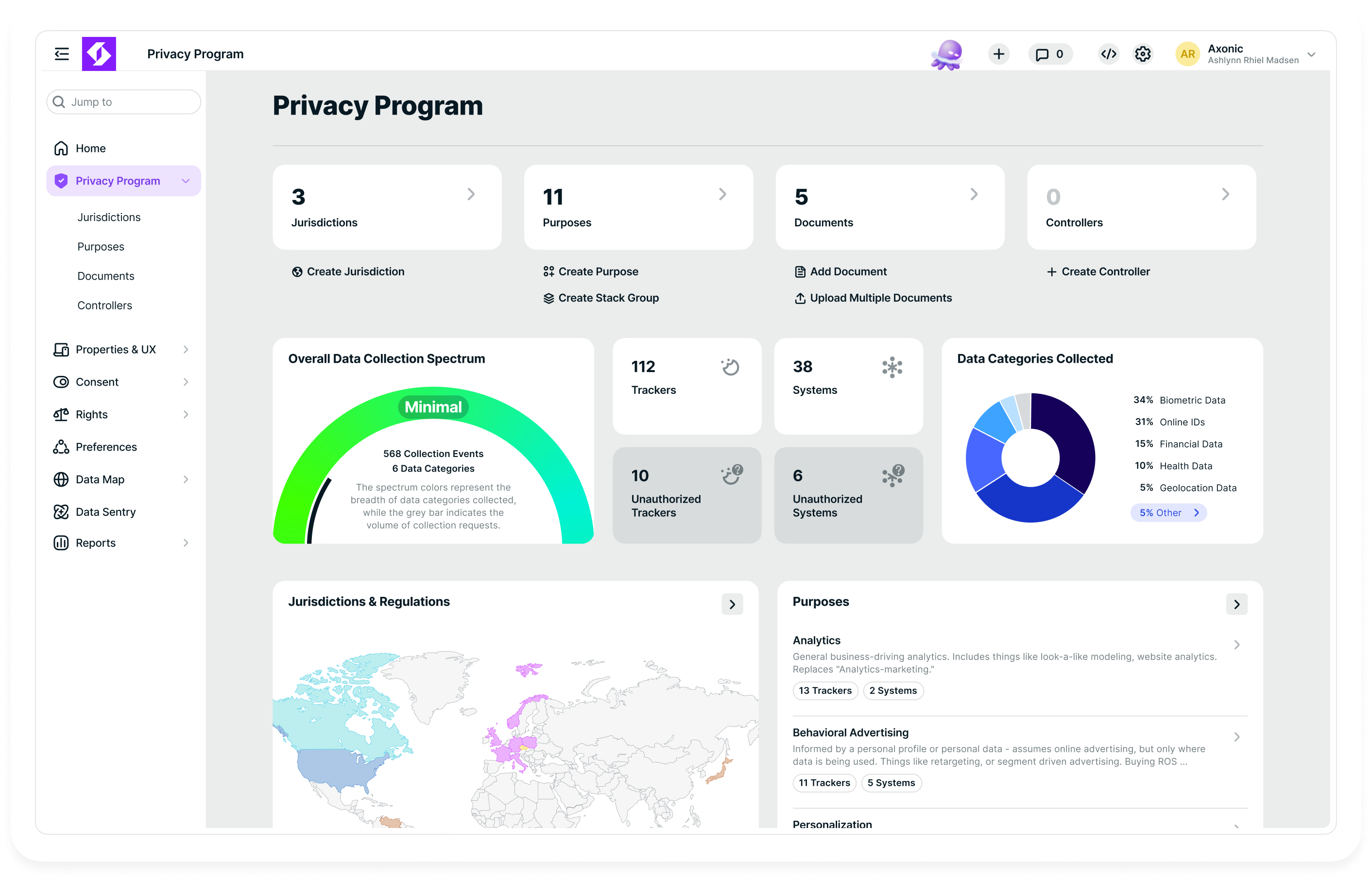
When you automate these processes, you enable your internal stakeholders:
- Your developers and marketers can do their jobs without fretting about regulations
- Your legal team can set guidelines for notice and consent, secure in the knowledge that any changes they make will ripple through your whole data ecosystem (including vendors or third-party companies using your data!)
Final thoughts: Preparing your business for KCDPA
The KCDPA introduces clear responsibilities for businesses and meaningful rights for Kentucky consumers. With enforcement on the horizon, now is the time to assess your data practices, update privacy notices, build consumer rights workflows, and review vendor contracts. Taking proactive steps not only ensures data privacy compliance but also strengthens trust with your customers in an increasingly privacy-conscious environment.
Contact Ketch today to streamline your compliance and future-proof your privacy strategy.
Read further: 2026 U.S. State Privacy Laws: what you need to know


